
Autism spectrum disorder (ASD) isn’t a one-size-fits-all gig. It’s a range of neurological differences that affect how folks think and communicate. In schools, understanding these differences is key to creating a supportive environment.
Kids with autism might face hurdles like sensory overload from loud noises or bright lights in a bustling classroom. Some might struggle with changes in routine or have a hard time with social interactions. Recognizing these challenges is half the battle.
For educators and classmates, a little empathy goes a long way. It’s not about pity, but about putting yourself in others’ shoes and getting where they’re coming from. This helps create a school culture where every student feels included and valued.
When educators are aware of the diverse needs of students with autism, they can tailor lessons and interactions. This isn’t rocket science, it’s about being aware and making small changes that make a big difference.
Implementing Supportive Strategies in the Classroom
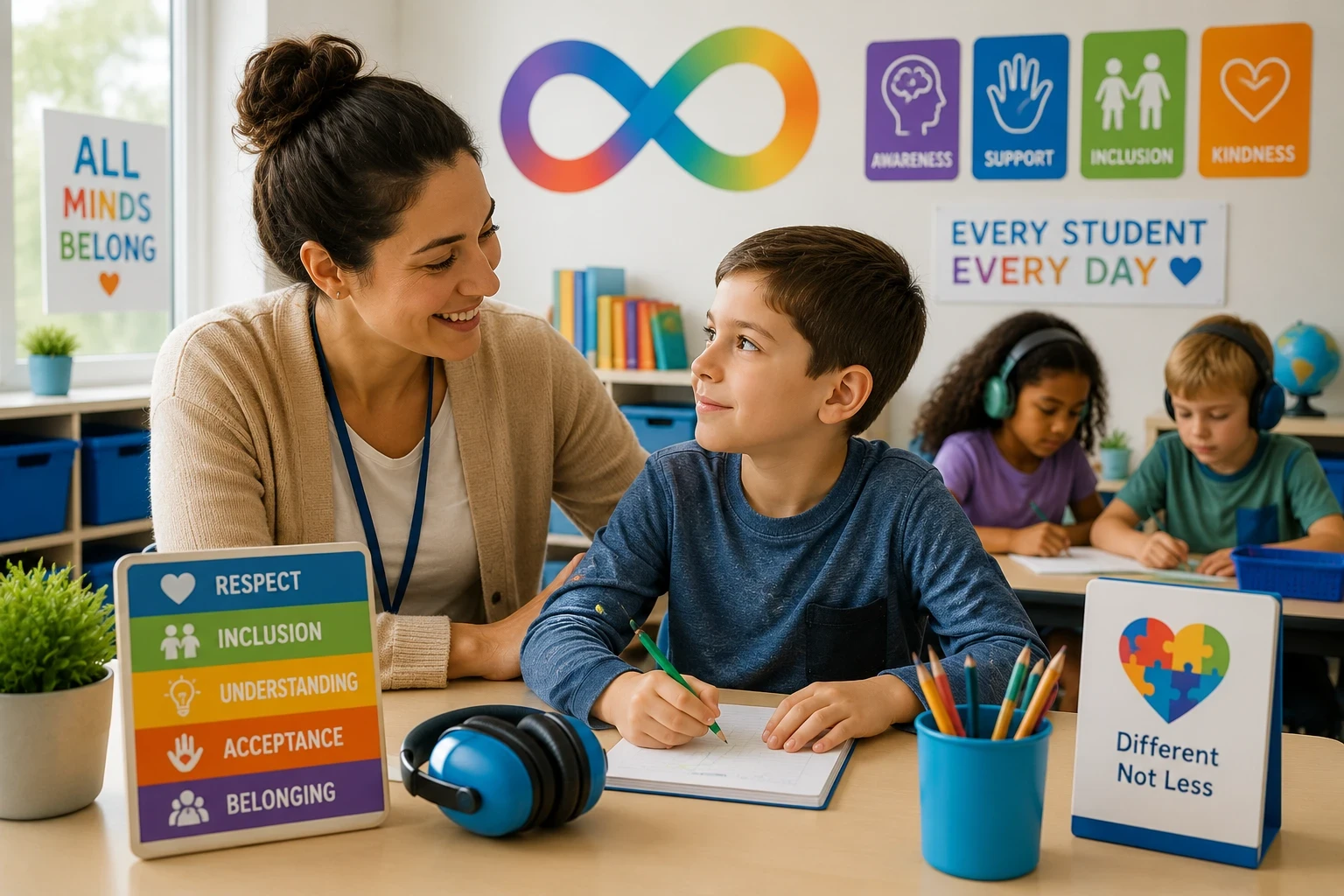
Creating an inclusive classroom isn’t just a nice-to-have, it’s a must. Start by looking at ways to make the learning environment more welcoming. Having a sensory-friendly room can really help. Think quiet corners with soft lighting, noise-canceling headphones, or fidget tools. These little adjustments can help kids stay grounded and focused.
Teacher training is a game changer. When teachers know about autism and the best ways to support students, everyone wins. Workshops on autism awareness and inclusive teaching styles can arm educators with the tools they need to help every kid shine.
Tech is your friend here. Assistive technology like communication devices or educational apps can open up a whole new world for students with autism. It’s about finding what works for each individual and running with it. Whether it’s tablets that help with writing or software that assists with speech, the right tech can make a big difference.
Building a learning strategy that fits everyone might seem daunting, but it’s totally doable. With the right tools and mindset, classrooms can become vibrant spaces where diversity is celebrated and supported.
Building School-Wide Autism Support Systems
Creating a supportive school environment for students with autism goes beyond just one classroom. It requires a whole-school approach. One effective way is setting up a peer mentoring program. These programs can foster social skills and encourage genuine friendships, helping students with autism feel connected.
Parents and autism specialists are key players in this puzzle. Regular meetings and open communication between them and the school staff ensure that support is consistent and individualized. It’s like having a team huddle before a big game; everyone gets on the same page and knows their role.
Educating the whole school community about autism can break down stereotypes and promote understanding. Hosting workshops or seminars where people can learn about autism can make a world of difference. When everyone knows more, everyone does better.
Don’t forget the power of school policies. Crafting and enforcing rules that protect the rights of students with special needs ensures that they have the same opportunities to succeed as their peers. It’s about laying a foundation where every student, regardless of their needs, can thrive.