
Attention Deficit Hyperactivity Disorder, or ADHD, is a condition that primarily affects children’s ability to concentrate and control impulses. It can manifest in many ways, making it crucial for parents, caregivers, and teachers to stay informed.
Early signs of ADHD often appear at a young age, though they can sometimes be mistaken for normal behavior variances. Recognizing these signs early can substantially impact how effectively one manages the condition and the child’s overall development.
Common early indicators include:
- Struggles to stay focused in quiet or structured environments
- Excessive talking or fidgeting
- Difficulty following instructions or completing tasks
- Frequent interruptions during conversations or activities
- Easily distracted by surrounding noises or movements
- Trouble organizing tasks and activities
Understanding these initial symptoms is essential, as prompt recognition leads to earlier intervention. Early treatment can pave the way for better health outcomes and improved social and academic skills for the child.
Being observant and proactive in addressing these signs is like planting seeds for a positive future. It empowers families to seek the necessary evaluations and support, setting the child on a path towards a more balanced and fulfilled life.
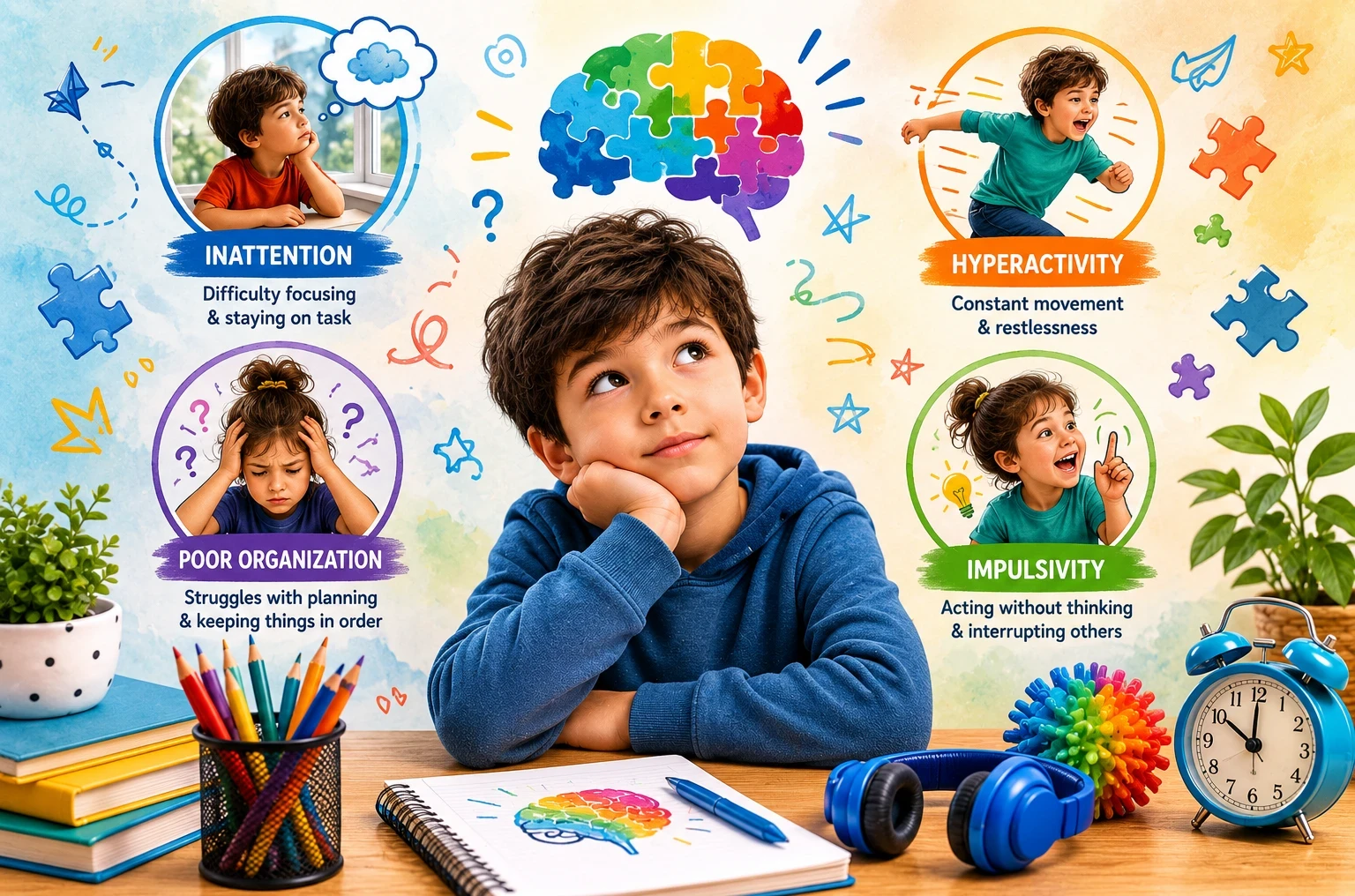
Common Behavioral Symptoms of ADHD
Children with ADHD often exhibit distinct behavioral patterns that tend to stand out, especially in a structured environment. Identifying these patterns is crucial for initiating helpful strategies.
Inattention and distractibility are hallmark symptoms. These kids may find it hard to tune into a single task, often moving from one activity to another without finishing the first. It’s not unusual for teachers to notice a child’s mind wandering during class activities.
Hyperactivity is another tell-tale sign. This can manifest as constant movement, such as fidgeting in seats, running or climbing at inappropriate times, or having trouble playing quietly. This high level of activity can sometimes be misinterpreted as mere excess energy.
Impulsivity can lead these kids to act without thinking. They might interrupt conversations, answer questions before they’re asked, or struggle to wait their turn in lines or games. These actions are not disrespectful behavior, but rather part of the condition’s symptomatology.
Organization and completing tasks might pose formidable challenges. Children with ADHD may appear forgetful in their daily activities, often requiring several reminders to accomplish simple tasks. This isn’t due to laziness but rather a difficulty in maintaining an organized approach to tasks.
Lastly, forgetfulness and daydreaming often accompany these behavioral manifestations. A child might seem “spacey” or prone to staring off into space, which can hinder them from effectively absorbing information.
Recognizing these behavioral symptoms enables caregivers and educators to tailor approaches that nurture a supportive environment, fostering both learning and emotional growth.
Understanding Cognitive and Emotional Symptoms
Cognitive and emotional symptoms of ADHD can often be subtle, sometimes blending into typical developmental phases. Yet knowing how these symptoms manifest is crucial for guiding kids toward healthier patterns.
Children with ADHD frequently experience challenges maintaining focus and attention for extended periods. They may start tasks enthusiastically but lose interest quickly, especially if the activity demands sustained mental effort.
Emotional regulation can be another hurdle. Mood swings or emotional outbursts might occur, seemingly out of nowhere. These swings aren’t necessarily tied to external events but can stem from internal frustrations and sensitivities.
Following instructions and remembering details might pose difficulties. A child may understand a task in theory but struggle with practical follow-through. This often leads to incomplete assignments or forgotten chores, not through willful neglect but due to real working memory challenges.
Social interactions can also suffer. Children might have trouble picking up on social cues, leading to misunderstandings or conflicts with peers. Despite a desire for friendship, these struggles can sometimes result in isolation or being misunderstood by classmates.
Developing coping mechanisms can help manage these cognitive difficulties. Encouraging routines, visual aids, and mindfulness techniques can aid in managing focus and emotional responses.
Parents, caregivers, and educators can play a pivotal role in enhancing a child’s coping strategies. Offering consistent supports and positive reinforcement can make a significant difference, helping the child gain confidence in managing these symptoms.
Navigating Diagnosis and Treatment Options
Getting a proper evaluation for ADHD is essential for making informed decisions about treatment strategies. It typically involves a thorough assessment by healthcare professionals who specialize in child behavior and development.
Diagnosis often includes a combination of interviews, questionnaires, and behavior rating scales. These tools help create a comprehensive picture of how ADHD affects the child’s functioning in different environments.
Behavioral therapy is a common recommendation, focusing on modifying specific problematic behaviors and reinforcing desired ones. It can involve both individual sessions and family therapy, ensuring a consistent approach across different settings.
Medication may also be part of the treatment plan. Stimulant and non-stimulant medications can significantly improve focus, attention, and impulse control. However, it’s vital to consider potential side effects and maintain ongoing communication with healthcare providers to adjust dosages as needed.
Empowering caregivers with effective management strategies is equally important. Offering structure and routine at home can help the child know what to expect, reducing anxiety and promoting better behavior management. Consistency across home and school environments is key.
Support groups for parents or caregivers of children with ADHD can provide emotional support and practical advice. Sharing experiences with others facing similar challenges can offer new insights and coping strategies.
Navigating the path of ADHD doesn’t have to be a solitary journey. With the right tools and support, children can lead fulfilling and successful lives, overcoming the hurdles that ADHD might present.
What are your thought on this? Comment below!